Experiential marketing in 2026: what the data says
If you are building a 2027 plan, the 2026 numbers on experiential marketing are worth a close read. Spend is growing faster than overall marketing, attendees say they want more in-person events, and the pressure to prove results has eased, though not disappeared. Below is what the major reports published this year actually say, with links to each source, followed by what we think it means for planning and the formats we see working on our own projects.
Spend: the fastest B2C growth in a decade
The broadest number comes from PQ Media’s Global B2C and B2B Experiential Marketing Forecast 2026-2030, released June 9, 2026:
- Global experiential spend grew 8.3% to $138.94 billion in 2025 and is pacing 10.3% growth in 2026.
- B2C experiential reached $97.24 billion in 2025 and is pacing 10.9% growth in 2026, which PQ Media calls the fastest growth in a decade.
- B2B experiential reached $41.74 billion in 2025 and is pacing 8.9% growth in 2026.
- U.S. spend was $64.43 billion in 2025, 46.4% of the global total, and is pacing 11.8% growth in 2026.
- Live consumer events in the U.S. grew 11.1%, and sports was the largest U.S. sponsorship category at $16.98 billion.
PQ Media ties the 2026 growth partly to the Winter Olympics, the FIFA World Cup and record political spending, so some of the jump is a tentpole year. Its CEO, Patrick Quinn, said brands are increasingly focused on live experiences “where attention is undivided.”
Brand-side intentions point the same way. The EventTrack 2026 study from Event Marketer and Sparks, a survey of more than 1,000 U.S. corporate marketers and attendees, found that brands across sectors expect to spend 8% to 11% more on events in 2026, and fewer than 10% plan to produce fewer events. In the UK, the IPA Bellwether report, as cited by The Drum, ranked events as the fastest-growing marketing category in Q3 2025, with a net balance of +10.9%.
Not every budget is rising. In figures from Bizzabo’s 2026 State of Events benchmark, 40% of respondents expected event budgets to grow in 2026, 40% expected them to stay flat and 20% expected a decrease. Growth is real, but it is uneven.
Attendees: more events, and they act on them
The audience side of the data is strong. From EventTrack 2026:
- 56% of attendees plan to attend more events than they did in 2025.
- 59% feel more positive about a brand after an event, and 61% are more inclined to purchase.
- 34% said their most recent brand interaction at an event was with a brand they did not already know or use.
- 59% capture content at live experiences, and 82% tell friends or family about the interaction.
- 73% care about sustainability.
Bizzabo’s figures line up: 54% of attendees plan to attend more in-person events, and 78% of respondents called in-person conferences their most impactful marketing channel.
There is a caution in the data too. Freeman’s May 2026 report on what keeps people away, based on nearly 20,000 responses from non-attendees, found that non-attendees skew younger and career-focused, and that value for cost is their top consideration. Sixty percent said they would be more likely to attend if an event offered education available only in person. People will come, but they want a reason they cannot get from a livestream.
Measurement: better, not solved
Bizzabo reports that 40% of organizers struggle to prove ROI, down from 70% in 2025. That is a large improvement in a year, and it matches what we see: clients arrive with clearer KPIs and better tools for tracking them. Bizzabo also found that 95% expect their organization’s use of AI in events to increase.
EventTrack adds a useful signal on priorities. Content created for live experiences is marketers’ top investment area, with 48% to 65% planning to spend more on it, and media coverage and PR is the top B2C objective. In practice, that means an activation is increasingly judged by what it produces for channels outside the room.
What the numbers mean for planning
Plan for the tentpole, and around it
A good share of 2026 growth came from the World Cup and the Olympics. Those calendars move on. Los Angeles alone hosts the Super Bowl at SoFi Stadium on February 14, 2027, according to the LA Super Bowl Host Committee, and the 2028 Olympics after that. Tentpoles bring crowds and press, but they also bring competition for venues, crews and permits. Book early, or pick a moment next to the tentpole instead of on top of it.
Budget for content as a deliverable
If 59% of attendees are filming and marketers’ top investment is content, capture should be a line item with its own brief, not something left to the photographer on the day. Design the space so it reads on a phone, and plan the professional assets the brand will reuse afterward.
Give people a reason to show up in person
Freeman’s finding on in-person-only education applies well beyond trade shows. Access, expertise, hands-on time with a product, or a live version of something people usually consume on a screen are all reasons to leave the house.
Agree on measurement before design
With ROI pressure easing, the brands getting the most from events are the ones that set three to five KPIs before creative is locked and build the experience to capture them.
Three formats that fit the data
Our own work over the past two years tracks closely with what these reports describe. Three themes keep coming up.
Wellness as a luxury experience
Wellness programming answers the “reason to show up” problem directly, because it is built on expertise and hands-on time. We have partnered with goop on In goop Health summits since 2018, including the Los Angeles summit in November 2024. In December 2025 we produced Function Health’s first summit, The Function Function, in Los Angeles, with more than 19 speakers and a biophilic design. Wellness also works in smaller, more personal formats: the TRESemmé A-List Retreat brought 17 influencers to Jackson Hole for styling sessions, a charm bar and après-ski parties, with the goal of organic content rather than scripted posts.
The podcast as a live event
Creators are filling rooms. A survey by the Influencer Marketing Factory, reported by PPC Land in September 2025, found that 41% of U.S. social users aged 18 to 65 had attended at least one in-person influencer event in the past year, and the same article cites StubHub data showing influencers, podcasters and authors sold 500% more tickets in 2025 than in 2024. We have produced live tapings of the goop podcast, including a ticketed Season 2 taping in New York with Gwyneth Paltrow and Cody Rigsby in September 2025, and a live recording at 1 Hotel West Hollywood in September 2026. A live taping gives an audience access it cannot get from the feed, and it gives the show content it can publish.
Experiential entertainment
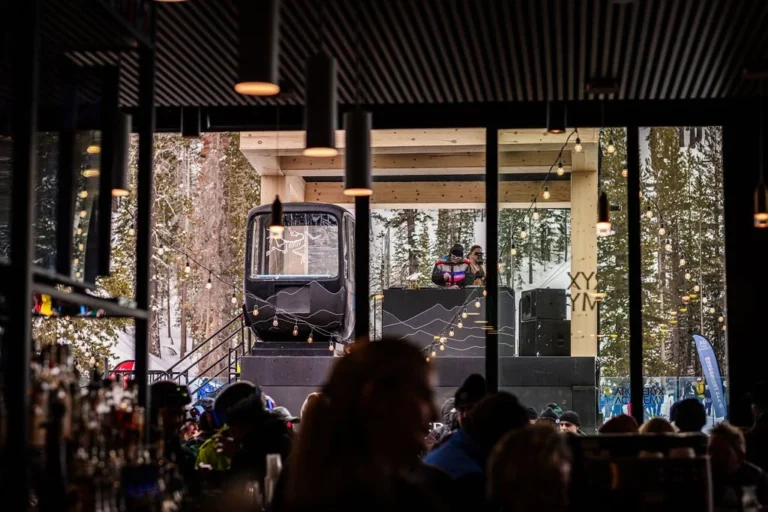
Guests increasingly expect to be part of the show rather than watch it. The BizBash and Public School Cannes Lions 2026 trends report, which observed more than 130 experiential moments, found brands leaning into “decidedly human” experiences. Our version of that runs from the large to the intimate: Paramount Peak at Super Bowl LVIII, with 13 IP activations and 4DX gondolas under one 36,000-square-foot mountain, to Josie Maran’s multi-sensory dinner in New York in September 2026, which included an interactive butter sculpture. Both treat the environment as the story and the guest as a participant.
A note on reading the reports
These studies measure different things. PQ Media tracks spend across the whole market, EventTrack and Bizzabo survey marketers and attendees, and Freeman surveys people who did not attend. Each has its own sample and method, so use the direction of the findings more than any single percentage. The direction is consistent: more money is going into live experiences, attendees are willing, and the brands that do best plan content and measurement as carefully as the build.
If you are planning for 2027 and want to talk through formats, markets or timing, our services page outlines what our Los Angeles and New York teams handle, or you can get in touch.