Fashion week activations: what works in New York
New York Fashion Week compresses a season of attention into a few days. This September the CFDA’s preliminary calendar ran from September 9 to 15, with about 70 runway shows and presentations, and every beauty and fashion brand without a runway slot was looking for its own way into the same conversation. As an experiential marketing agency in New York City, we have produced a number of those ways in. Here are four New York projects, three timed to fashion week and one that ran outside it, and what made each one work.
Miss Dior Millefiori at Gansevoort Plaza
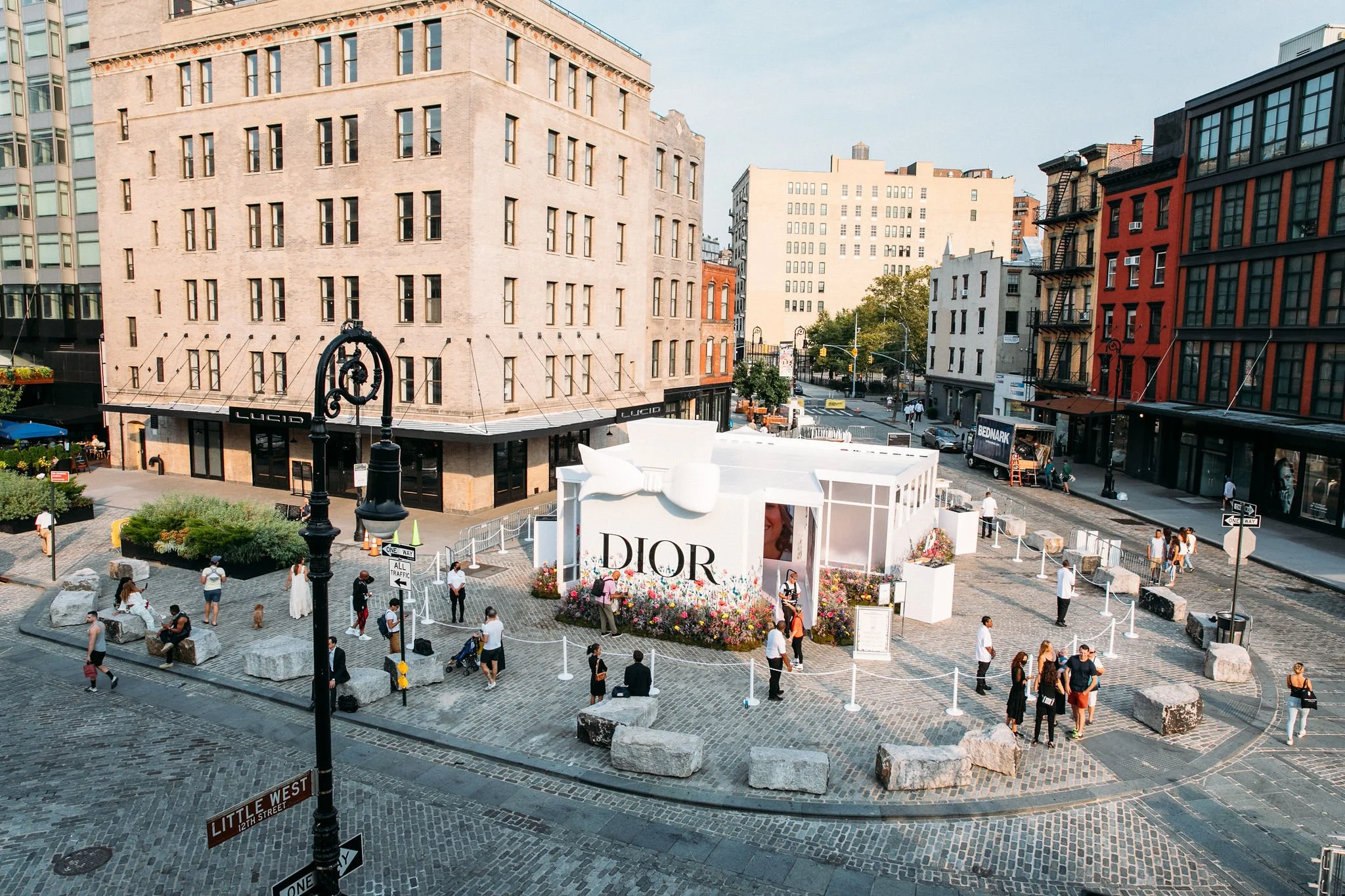
Miss Dior Millefiori was a global campaign with pop-ups in Paris, Tokyo, New York and Düsseldorf. We worked with Dior’s PR, retail and visuals teams to create the New York Fashion Week edition at Gansevoort Plaza in the Meatpacking District.
The challenge with fragrance is that the product is invisible. Nobody can see a scent from across a plaza, so the space has to stand in for it. The custom-designed structure took its shape from the Miss Dior bottle, which gave passersby something to recognize before they knew what was inside. Inside, the experience moved through a floor-to-ceiling video wall, immersive beauty experiences, an infinity flower field mirror room, a Dior café, custom bouquet making, and a photo moment built around a classic car overflowing with florals. Each stop translated a part of the fragrance’s floral story into something guests could see, touch or take home.
The results showed up at the register and on social. The pop-up sold out daily over its five days, welcomed more than 500 guests a day, and logged more than 32,000 pedestrian impressions. It won BizBash Gold for Best Beauty Brand, BizBash Silver for Best Pop-Up Experience, and Event Marketer’s Best Pop-Up Experience.
What worked: a structure that read as the product from the street, and a sequence of rooms that each did one job. Location did a lot of work too. Cara Kleinhaut later listed Gansevoort Plaza among her go-to venues in a BizBash piece on favorite event venues, where she wrote, “The venue is not a backdrop.”
Hourglass x Barneys New York at 14 Prince Street
For Hourglass Cosmetics’ 20th anniversary, we paired the brand with the legacy of Barneys New York in an experiential retail pop-up at 14 Prince Street in SoHo, opening during New York Fashion Week. It was a three-month project for our team.
Fashion week was only the opening. The pop-up stayed open for 38 consumer days and featured more than 45 rotating designers, so there was a reason to come back. Opening week revived Fred’s Cafe, a name with real nostalgia for longtime Barneys shoppers. VIP evenings, special guest panels, and visits from celebrities and influencers kept it on the fashion week circuit, while the retail floor kept it open to everyone else. The space drew thousands of visitors daily and surpassed its sales targets.
What worked: using the week’s attention to open something with a longer life. A rotating designer roster turns a one-time visit into a reason to return, and a single nostalgic detail like Fred’s Cafe gives press and guests a story to repeat. See the full Hourglass x Barneys case study.
J.Crew’s 40th anniversary at Pier 17
J.Crew celebrated 40 years with a block party at the Seaport, the culmination of a summer campaign. The location was the idea. As Vanity Fair noted, Pier 17 is where the brand opened its first store 40 years earlier. The celebration landed the day after Labor Day, at the start of fashion week, which made it a natural opening for the season. ELLE called it “a literal high note to kick off fashion week.”
The event was layered by audience. Talent, press and VIPs had exclusive moments first, including a rooftop performance by The Strokes. A consumer takeover at Pier 17 followed. Across five days, the celebration welcomed more than 5,000 guests and earned 8+ press features. We drew on the J.Crew archives throughout, and Vogue described vintage catalog covers flashing above guests as they made their way to the rooftop. The project was a BizBash finalist for Best Press Event.
What worked: a venue with a direct line to the brand’s history, archives that gave the anniversary substance, and a sequence that served press and VIPs before opening to the public. The J.Crew 40th case study has more.
Hourglass x Andrés Reisinger, Unreal Blush
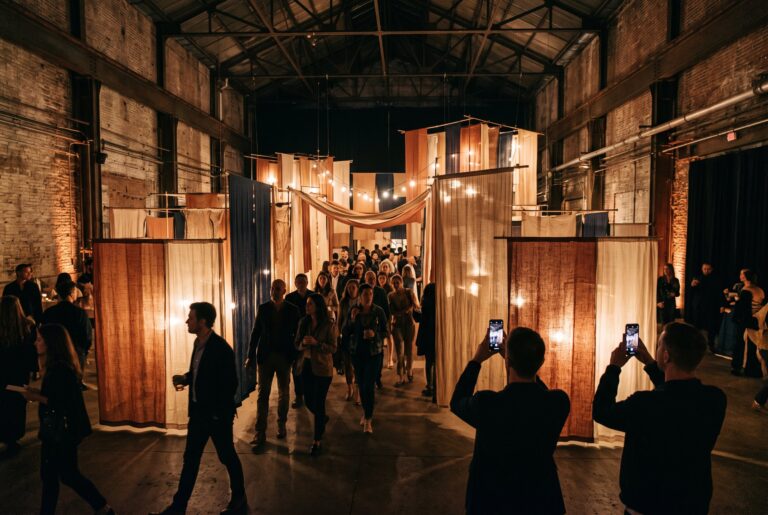
Our fourth example did not run during fashion week, which is part of the point. To launch Hourglass’s Unreal Liquid Blush in July 2024, we collaborated with Argentinian artist Andrés Reisinger on a three-day pop-up at the corner of Prince and Elizabeth Streets in SoHo. The space was filled with pink-hued drapes inspired by Reisinger’s signature style, blurring the line between his digital work and a physical room.
Guests experienced an art exhibition, exclusive product launches, and a limited-edition mystery box to shop. VIP nights extended the run for press and friends of the brand. The activation drew thousands of visitors and generated significant foot traffic and press coverage.
What worked: an artist collaboration gives press a story beyond the product, and a limited item like the mystery box gives guests a reason to come now. Timing it away from fashion week also meant it competed with far less noise. More on the Unreal Blush case study page.
What the four have in common
- The product is the center of the room. Each space was designed outward from what the brand sells: a fragrance bottle, a blush, an archive, a retail floor.
- Location is part of the strategy. Gansevoort Plaza and Prince Street bring foot traffic on their own. Pier 17 brought history.
- Audiences are layered. VIP nights, panels and press moments sat alongside public hours, so each group got what it came for.
- There is a reason to come now. Daily sell-outs, rotating designers, a mystery box and a one-night rooftop show all create urgency.
- Every space is built to be photographed. The classic car, the mirror room, the catalog covers and the pink drapes all photograph well. We wrote more about this in our post on designing for digital.
How to measure a fashion week activation
Fashion week activations are often judged on buzz alone, which makes them hard to defend in a budget meeting. We set measures before the build starts, and they differ by format. For Miss Dior Millefiori, the numbers that mattered were daily sell-outs, more than 500 guests a day and more than 32,000 pedestrian impressions. For Hourglass x Barneys, it was daily visitors over 38 consumer days and sales against target. For J.Crew, it was 5,000+ guests and 8+ press features.
Press is a fair measure for a week built around editors. In Event Marketer’s EventTrack 2026 study, media coverage and PR was the top objective for B2C event marketers. The same study found 34% of attendees said their most recent brand interaction at an event was with a brand they did not already know or use, which is a strong argument for public hours alongside the VIP program.
Planning notes for fashion week in New York
Fashion week in New York runs on a tight calendar, and the production plan has to follow it.
- Know the calendar’s quirks. This September, the CFDA calendar held no shows before 10 a.m. on September 11 for the 25th anniversary of 9/11, according to V Magazine. Events that week planned around it.
- Budget the permit early. Commercial and promotional events on city streets need a street event permit through the city’s Street Activity Permit Office. NYC’s published fees run from $3,100 per location per day for a small event, applied for at least 14 days ahead, to $66,000 for an extra-large event with up to 60 days’ lead time, plus a $1 million minimum in liability insurance.
- Plan load-in around the neighborhood. SoHo and the Meatpacking District are dense, busy retail streets. Delivery windows, sidewalk access and build hours all need to be settled with the venue and landlord before the creative is locked.
- Book talent and press moments around the shows. Editors and creators are running between shows all week. The best slots are the ones that do not compete with the biggest runway times.
Our New York team produces year-round, from premieres to retail pop-ups. If you are planning for next season, start with our experiential marketing agency New York City page or contact us.