Pop-up permits in New York, Chicago and Los Angeles
The fastest way to lose a pop-up is to design it before you know where it is allowed to stand. Every city regulates sidewalks, streets, plazas and temporary structures differently, and the rules decide how big you can build, how long you can stay and how far ahead you need to apply. This guide covers what the official city pages say for New York City, Chicago and Los Angeles, plus lessons from pop-ups and mobile activations we have produced in New York and Los Angeles.
A note before you plan: permit rules, fees and lead times change. Everything below reflects the city pages we checked in October 2026, linked in each section. Confirm current requirements with the city, and with the property owner if you are on private land, before you commit to dates, designs or vendors. Nothing here is legal advice.
Start with one question: whose ground is it?
Before any city rule applies, sort your location into one of three buckets:
- Private property, such as a vacant storefront, a parking lot, a mall courtyard or a rooftop. The owner’s lease or license sets most of the terms, but city building and fire rules still apply to whatever you build.
- Public right of way, meaning streets and sidewalks. This is where cities are strictest, and in some cities brand marketing is not allowed there at all.
- Public space with its own manager, such as a park, a plaza or a pier. These often have separate rules, fees and sponsorship programs.
The answer changes the timeline, the cost and sometimes whether the idea can happen at all.
New York City
New York regulates street events through the Street Activity Permit Office (SAPO), under the Mayor’s Office of Citywide Event Coordination and Management. According to the city’s street events page, commercial and promotional events are classified by size, and fees are charged per location, per day:
- Small: $3,100, with the application due at least 14 days before the event.
- Medium: $11,000, due 30 days before.
- Large: $25,000, due 45 days before.
- Extra large: $66,000, with a deadline that can be up to 60 days before, depending on the location.
Your organization must carry at least $1 million in liability insurance, and more may be required. The page says medium, large and extra-large events are coordinated with the NYPD, the Department of Transportation and the Fire Department, that the NYPD issues separate permits for things like no-parking signs and amplified sound, and that all other required agency permits must be in hand before the SAPO permit is granted. In practice, that last point means your SAPO deadline is really the deadline for everything else too.
Two things follow for budgeting. First, a multi-day street activation multiplies the daily fee, so a five-day medium event is a very different line item from a one-day one. Second, the lead times are minimums. Build in time for design changes, insurance certificates and the other permits before you count backward from opening day.
What we have learned in New York
Many of our New York pop-ups have been in SoHo and the Meatpacking District, where foot traffic does a lot of the marketing for you.
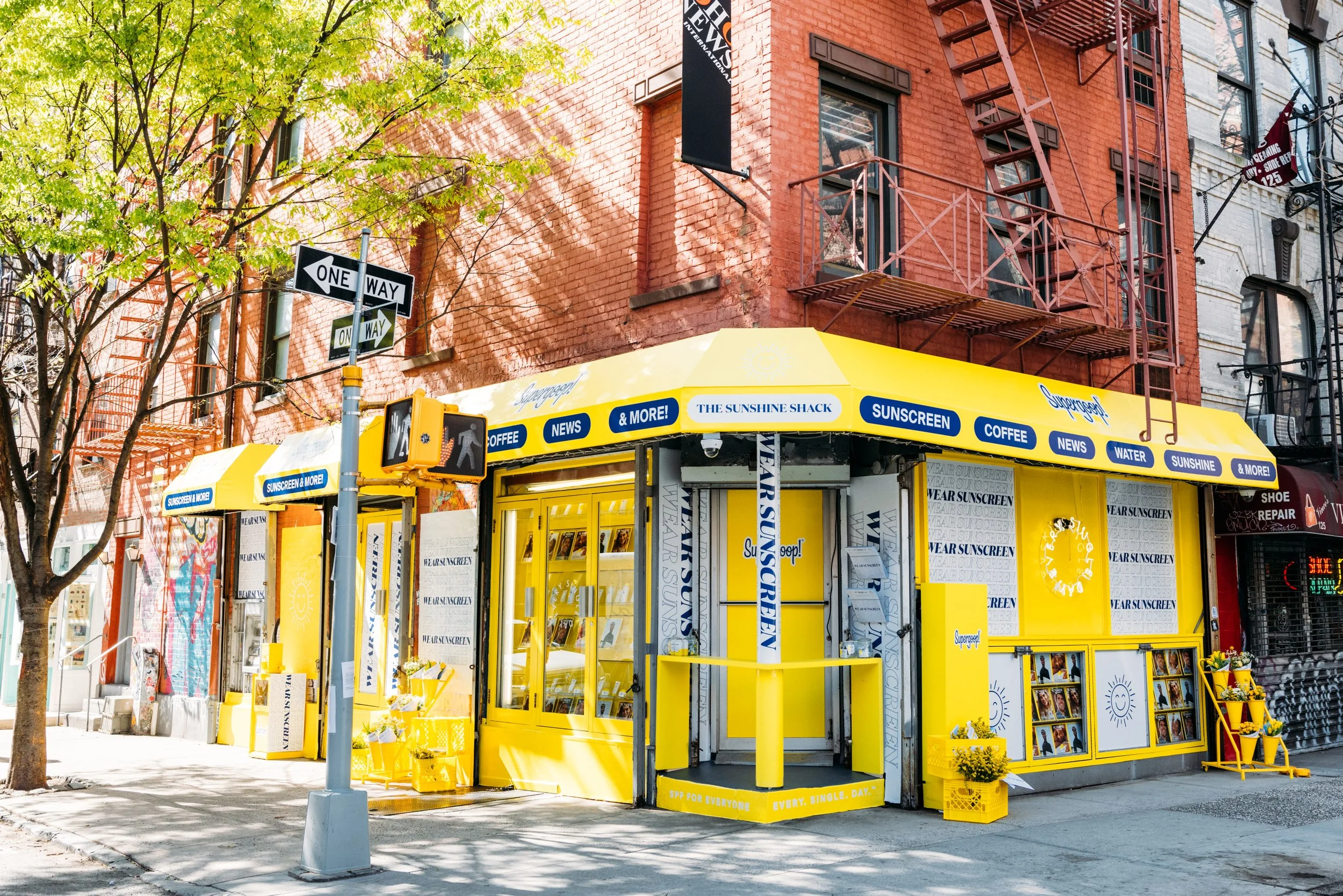
- Use structures that already exist. The Supergoop! Sunshine Shack began as a takeover of the SoHo newsstand on Prince Street. Working with a familiar street fixture gave the campaign a landmark without building one from scratch, and the concept later traveled to 10 festival stops.
- Corners earn their cost. The Hourglass Unreal Blush pop-up with artist Andrés Reisinger ran for three days at the corner of Prince and Elizabeth Streets and drew thousands of visitors. A corner gives you two sightlines and two streams of foot traffic.
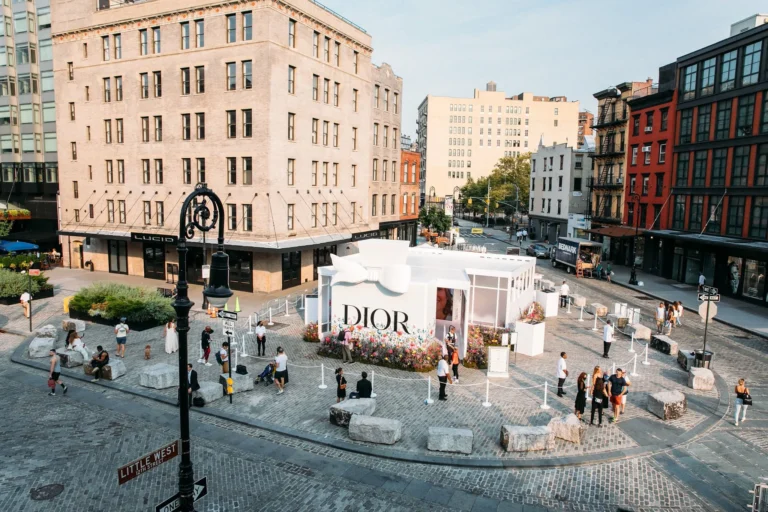
- Custom structures in public places need early engineering. Miss Dior Millefiori at Gansevoort Plaza during New York Fashion Week was a custom structure inspired by the Miss Dior bottle, with a video wall, a mirror room and a café inside. It ran five days, logged more than 32,000 pedestrian impressions and sold out daily. A build like that needs drawings early, because the approvals depend on them.
- Mobile is a series of small events. The Perelel Health launch in July 2026 ran for two days from a custom mint truck, serving slushies and popsicles from the West Village to the Upper East Side. Every stop raises its own questions about where a vehicle can stop, serve and stage. Plan each one as a location, not as a dot on a route.
More on our work in the city is on our New York City experiential page.
Chicago
Chicago has the clearest rule of the three, and it changes how a pop-up gets planned there. The Department of Cultural Affairs and Special Events (DCASE) special events page, checked in October 2026, says its application is designated for festivals and athletic events, and it states plainly: “Marketing activations are NOT permitted on public rights of way.” To get city permission, a marketing activation must be on private land, and sidewalks and streets are prohibited for marketing activities. The page points to Chicago Park District properties as an alternative.
For events that do go through DCASE, the processing fee rises the later you file, from $100 for applications completed 180 to 60 days out to $2,000 for those completed 28 to 21 days out, and applications are not accepted with fewer than 21 days to go.
What that means for a pop-up:
- Plan for private property from the start: a storefront, a lot, a building lobby or a retail center courtyard.
- If you want a park setting, the conversation is with the Park District, not the street permit office.
- Do not design a sidewalk sampling crew or a curbside build into a Chicago plan and hope to permit it later.
We have produced in Chicago from our Los Angeles and New York teams, including a DIRECTV “Blue Room” tour stop in 2026 that turned genre packs into immersive scene rooms. Our Chicago page has more.
Los Angeles
Los Angeles splits the job across several departments, and the first thing to know is who does not handle it. FilmLA states that it does not process special event permit applications. It handles film permits only, so a brand pop-up is not a FilmLA matter unless you are filming.
For temporary events, the Department of Building and Safety issues Temporary Special Event (TSE) permits. Per the LADBS TSE page:
- A TSE covers a temporary use of a building, property or public way, for events of no more than seven days. Longer events generally need a building permit or special approval.
- Structures that trigger the permit include tents or canopies larger than 12 feet in length or width on commercial property (450 square feet on residential property), stages or platforms more than 30 inches above grade, grandstands or bleachers, and structures taller than 12 feet.
- Other agencies can be involved: City Planning for zoning or land-use conditions, the Fire Department for a safety plan, the Police Department for live music, dances or alcohol, and the Bureau of Street Services for a street use permit if the event is in the public right of way.
The seven-day line is worth designing around. A three-day pop-up and a three-week residency are different permitting projects, even in the same storefront.
What we have learned in Los Angeles
The Khloud Foods trolley launch for Khloé Kardashian’s popcorn brand was a two-day mobile experience with seven stops, including meet-and-greets with Khloé at select locations. The brief called for coordinating celebrity appearances, permitting and logistics across some of Los Angeles’ busiest neighborhoods. A celebrity appearance changes crowd size, and crowd size changes what each stop needs, so the talent schedule and the permit plan have to be built together.
Private retail centers are another strong option in Los Angeles. We have run pop-ups at The Grove for Olaplex during Oscars weekend and, in October 2026, for Cathay Pacific’s 80th anniversary. A managed property brings its own rules, but it also brings foot traffic, security and a single point of contact. Our Los Angeles experiential page covers more of our work there.
A permit timeline that works in any city
- Before concept sign-off: decide private property, public right of way or managed public space, and check whether the city allows your type of activation there at all.
- Before design is final: list every structure, power source, sound element, food or beverage item and vehicle. Each can trigger its own permit.
- As early as the city allows: file. Late fees, as in Chicago, and minimum lead times, as in New York, reward early filing.
- In parallel: secure insurance certificates, landlord or property approvals, and any police or fire sign-offs.
- Before load-in: have every permit printed and on site, with one person on the team responsible for producing it if an inspector asks.
And once more: confirm the current rules with the city for your dates. The pages linked above are the right place to start, and the departments behind them are the final word.