What an experiential marketing agency actually does
An experiential marketing agency plans, builds and runs the in-person part of a brand campaign: the pop-up, the premiere, the summit, the branded trolley that makes seven stops in two days. That is the short answer. The longer one is a chain of phases, each with its own failure points, and you learn the most about an agency from how it handles the unglamorous ones.
Below is how the work runs at AGENC, with examples from AGENC projects, followed by a checklist you can use when hiring any experiential marketing agency, including us.
Phase 1: Insight, or why you are gathering at all
Every project starts with purpose. Launching a product, driving trial, courting press, building community and aligning a leadership team each lead to a different footprint. Our founder Cara Kleinhaut puts one question near the top of her venue checklist: is this built for the people standing in the room, or for what they post the moment they leave it? Those are two different events, and the answer shapes every phase that follows.
Useful insight is specific. For the Kosas DreamBeam launch at Coachella 2025, the insight was two ordinary festival problems: too much sun and not enough ways to get around. The response was a fleet of four custom pink Broncos topped with oversized DreamBeam products, giving rides and handing out sunscreen. More than 6,000 samples went out, and the activation logged $3.5M+ in earned media value during Weekend 1 alone. The idea worked because it solved something guests already cared about.
Phase 2: Concept and creative direction
The concept turns the insight into a place people can walk into. A good one answers practical questions early: what is the guest’s path through the space, where are the photo moments, and what does the product do in the middle of it all?
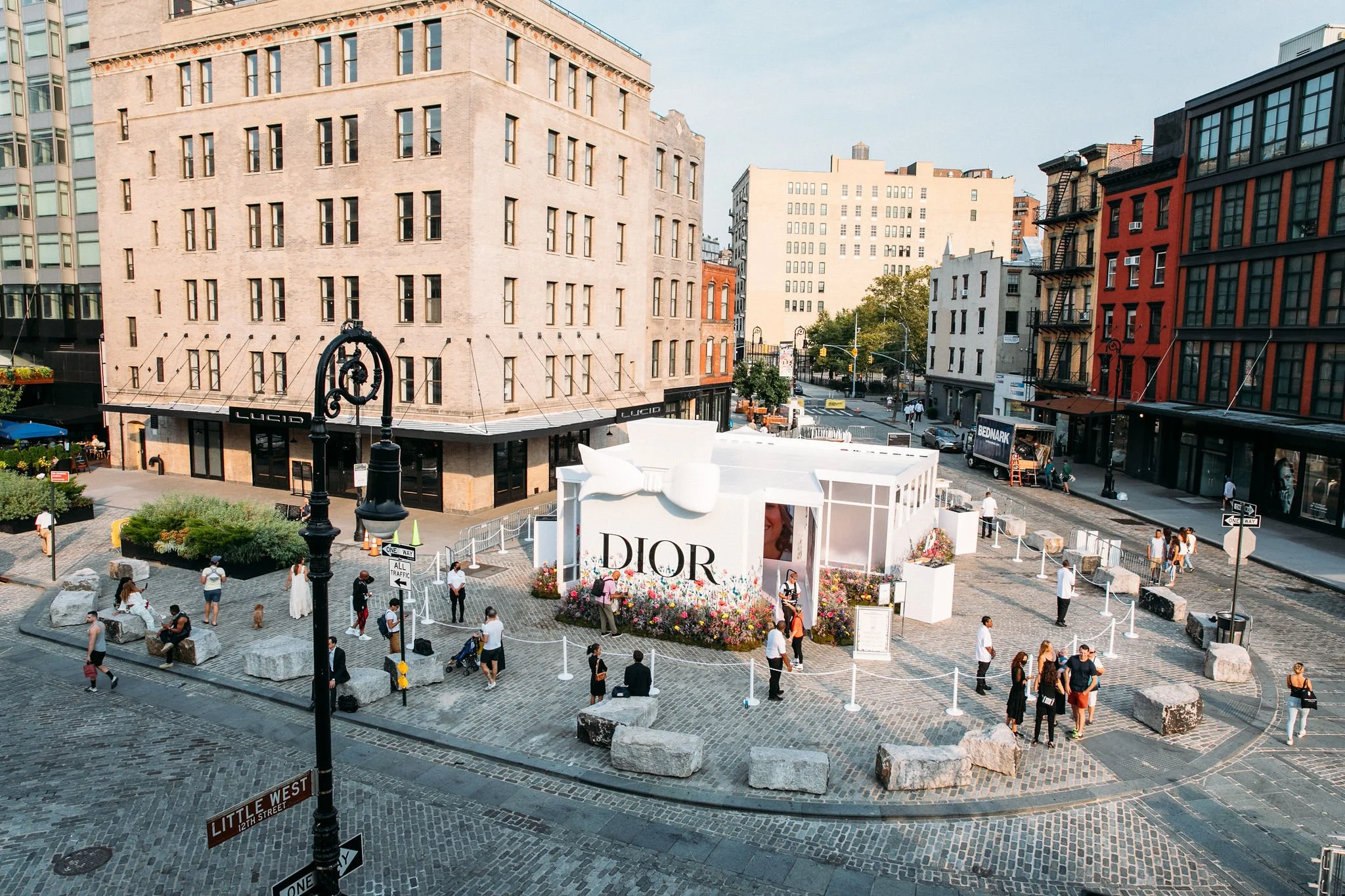
For Miss Dior Millefiori during New York Fashion Week, we worked with Dior’s PR, retail and visuals teams on a structure inspired by the Miss Dior bottle. Inside were a floor-to-ceiling video wall, an infinity flower-field mirror room, a Dior café, custom bouquet making and a classic car overflowing with florals. Each element had a job. The café held people in the space, the bouquet station gave them something to carry out, and the car gave them the photograph. The pop-up sold out daily over five days and won BizBash Gold for Best Beauty Brand. You can see the build on the Miss Dior Millefiori case study.
Phase 3: Venue and site
Venue is one of the first creative decisions you make, whether you treat it that way or not. For consumer work, the block can matter more than the building, because foot traffic turns into impressions before any media money is spent. The Miss Dior pop-up at Gansevoort Plaza in the Meatpacking District logged more than 32,000 pedestrian impressions.
The practical checks are less romantic, and they are where experience shows:
- Walk the loading dock before you fall for the room. A beautiful space can lose an entire build if nothing wider than a doorway fits through the service entrance.
- Check ceiling height, rigging points and power drops against the actual design, not a smaller version of it.
- Get furniture, AV, Wi-Fi capacity, security, cleaning and access hours in writing before you sign.
- Ask for the exclusive vendor list on the first call. A required caterer or union crew can quietly double a line item.
- Work backward from guest arrival. A four-hour build window does not fit a twelve-hour install.
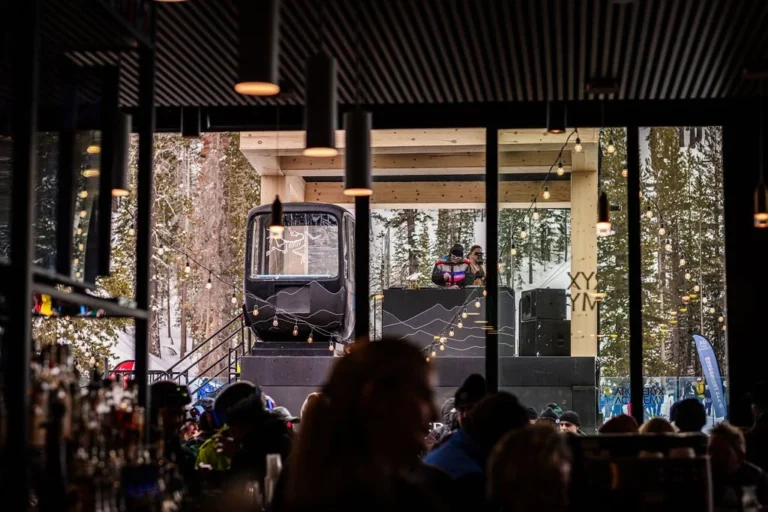
Sometimes the venue is the idea. The Arc’teryx Academy took over California’s Mammoth Mountain for three days of backcountry clinics, a ReBird repair shop, film nights, après-ski programming and after-hours DJ sets for more than 6,000 guests. A ballroom could not have carried that brand.
Phase 4: Permits and approvals
Permits are where timelines quietly fail. Rules differ by city, and they shape what is possible before any design work starts. In New York City, commercial and promotional street events are permitted by size, with fees starting at $3,100 per location per day and applications due at least 14 days out for a small event, rising to 45 days for a large one, plus at least $1 million in liability insurance (NYC Office of Citywide Event Coordination and Management). In Chicago, the city’s special events page states that marketing activations are not permitted on the public right of way and must sit on private land (City of Chicago DCASE).
Mobile programs multiply the work. The Khloud trolley launch for Khloé Kardashian’s popcorn brand made seven stops over two days, and the brief called for coordinating celebrity appearances, permitting and logistics across some of Los Angeles’ busiest neighborhoods. Every stop is its own small event with its own approvals.
Phase 5: Fabrication
Fabrication is where the concept meets physics and budget. Paramount Peak at Super Bowl LVIII in Las Vegas is the largest example in our portfolio: a 75-foot mountain with 45,000 pounds of build, a 36,000-square-foot immersive playground, 13 dedicated IP activations and five 4DX gondolas with 270-degree digital windows. It was seven months in the making, and it hosted two VIP events plus more than 2,000 guests a day.
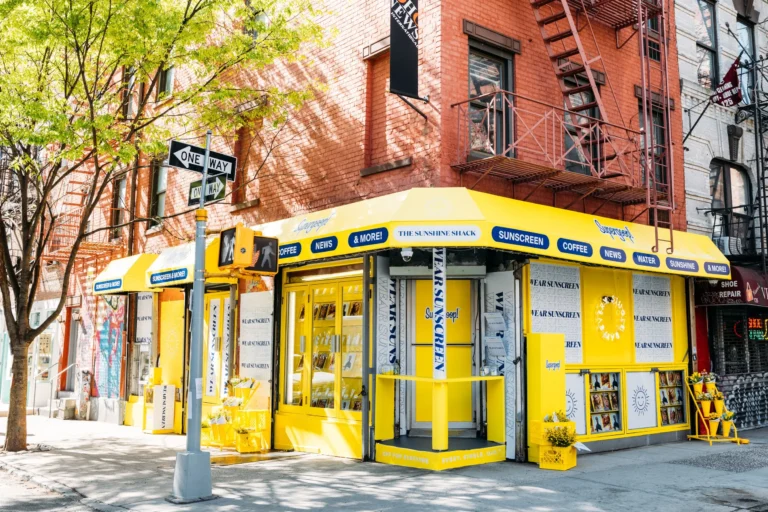
Not every build is that size, and smaller ones carry their own constraints. The Supergoop! Sunshine Shack began as a takeover of the SoHo newsstand on Prince Street and was designed to travel. The same concept went on to 10 festival stops and distributed 40,000 samples. When a structure has to move, decisions such as panel size, weight and how fast it packs down matter as much as how it looks on opening day.
Phase 6: Staffing and guest flow
Staff are the part of your brand that guests actually talk to. On the Drunk Elephant C-Luma tour, each city ran for two days with more than 2,000 visitors a day, and the program offered personalized skincare consultations along with samples and merchandise. At that volume, the consultation is only as good as the person giving it, and the line is only tolerable if someone is managing it.
Guest flow is a design problem, not an afterthought. Plan where people wait, how long a single interaction takes, where talent can hold out of sight, and where photographers stand so they get a clean shot without fighting the crowd. Do the arithmetic early: if a station takes four minutes per guest and you expect hundreds of people an hour, you need more stations or a shorter interaction.
Phase 7: Content capture
Much of an experience’s value is what leaves the room on phones and cameras. In the EventTrack 2026 study from Event Marketer and Sparks, 59% of attendees said they capture content at live experiences, and content created for live experiences was marketers’ top area for added investment.
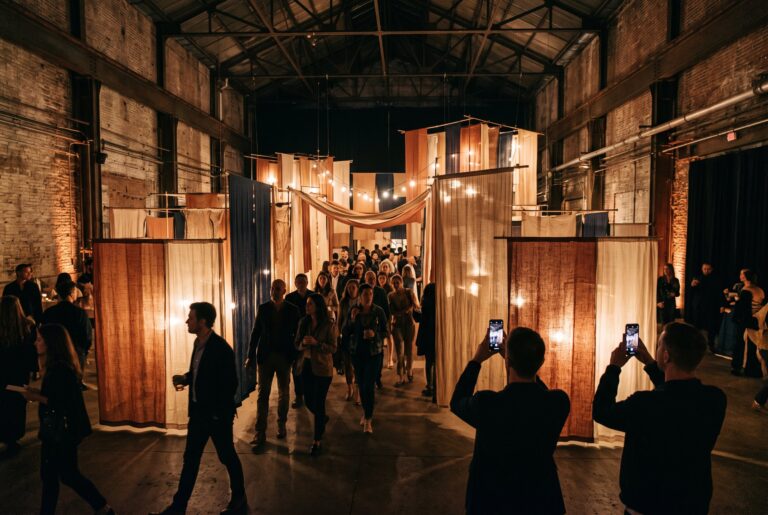
That is why we design for the lens from the start, an approach Cara calls #DesignForDigital. It means sightlines and lighting that work on a phone, moments that read in a vertical frame, and a professional capture plan for the assets the brand will use afterward. For the J.Crew 40th anniversary at Pier 17, the program closed with a dedicated content capture that drew on the brand’s archives, alongside a rooftop performance by The Strokes.
Phase 8: Amplification
An activation reaches thousands in person and can reach far more through press, creators and paid media. EventTrack found that 82% of attendees tell friends or family about a brand interaction at an event, and that 34% said their most recent event interaction was with a brand they did not already know or use. Media coverage and PR ranked as the top B2C objective.
Amplification has to be planned alongside the build, not bolted on after. For Prime Video’s The Rings of Power, we produced four premieres in four countries in 15 days, and coverage came from 813 media outlets. For TRESemmé, the entire format was built around 17 influencers on a winter retreat in Jackson Hole, designed to produce organic content rather than scripted posts.
Phase 9: Reporting
Measurement is getting easier, but it is not solved. In Bizzabo’s 2026 benchmark figures, 40% of event organizers said they struggle to prove ROI, down from 70% in 2025. The fix is agreeing on KPIs before the creative is locked: samples distributed, daily guests, dwell time, earned media value, social reach, sales in nearby stores, or leads captured. Then report the numbers as they came in, including the ones that missed.
How to hire an experiential marketing agency: a checklist
Use these questions in your first conversations. A strong agency will answer them with specifics and project names, not adjectives.
- Who will run my project day to day? Meet the lead producer, not only the pitch team, and ask what else they are producing in the same weeks.
- What have you built in this format? A conference, a multi-city tour and a one-day stunt need different muscles. Ask for work that resembles yours.
- What do you build in-house and what do you subcontract? Fabrication, staffing and content capture are often split across vendors. Know who is accountable for each.
- How do you handle permits in my cities? Ask for a permit timeline in the first proposal, with lead times and the agencies involved.
- Where is the contingency? Ask what the weather plan is, what happens if a permit is denied, and what the budget holds back for overtime and changes.
- How will we measure success? Agree on three to five KPIs and the method for each before design is final.
- What does the content plan include? Photo, video, live broadcast and usage rights should be scoped, not assumed.
- Can we speak with a past client? A reference who has been through load-in with the team will tell you more than a reel.
If you are comparing agencies for a launch, pop-up or summit, our services page outlines what our teams handle in-house, and our full portfolio shows how these phases played out on real projects.