What the 2026 World Cup taught brands about activation
The 2026 FIFA World Cup gave brands something they rarely get: 39 days of live crowds spread across 11 U.S. host cities, plus host cities in Canada and Mexico. The final whistle at MetLife Stadium on July 19 is behind us, and the numbers are in. They say a lot about where fans gathered, how brands reached them, and what to plan for the next time a tournament or a Super Bowl comes to town.
Here is what the host-city activations showed, with sources, and what we have learned from our own work around large sporting and music events.
The scale: fans showed up beyond the stadiums
According to a FIFA release dated July 27, 2026, FIFA Fan Festivals drew more than 9,017,000 visitors across 13 host cities over 39 days, which FIFA calls the best-attended edition since 2006. The peak day was June 27, with 543,020 visitors, and Mexico City had the highest total at 2.57 million.
The appetite reached well past official sites. Eventbrite data cited by Event Marketer on July 2, 2026 showed U.S. World Cup-related experiences up 403% compared with 2022, and attendance up 572%. Watch parties, bar takeovers, community fan zones and brand events filled the gaps between matches.
The lesson for brands is simple: the stadium is a small share of the audience. Most fans experienced the tournament in public spaces, in neighborhoods and on screens, and that is where most of the brand opportunity sat.
What happened city by city
Miami
Hard Rock Stadium hosted seven matches from June 15 to July 18, including a quarterfinal and the third-place match, and the FIFA Fan Festival ran free at Bayfront Park from June 13 to July 5, per Resident. Brands spread across neighborhoods: Fogo de Chão ran a 12-day takeover at Wynwood Marketplace, Chewy’s “Cuddle Shuttle” moved through the city, and Roborock set up at Aventura Mall, according to Event Marketer’s June 26 roundup and its July 2 follow-up. Miami showed that a mobile or neighborhood program can sit alongside the official fan festival rather than compete with it. See our Miami experiential page for how we produce there, from Art Basel to Super Bowl LIV.
Atlanta
Mercedes-Benz Stadium hosted a semifinal on July 15, and the Metro Atlanta Chamber projected more than $503 million in economic activity across Georgia, according to CBS News Atlanta. The FIFA Fan Festival was at Centennial Olympic Park. Brands treated Atlanta as a tour stop as well as a host city: Target’s Summer Goals Tour stopped there on July 11, and adidas brought its “Home of Soccer” program. More on the market is on our Atlanta page.
Houston
Houston’s numbers are the most detailed. The Houston Host Committee recap counted 480,186 fans at seven matches at NRG Stadium, 551,313 attendees at the FIFA Fan Festival in East Downtown (EaDo) over 39 days, and nearly 1 million visitors to EaDo, with traffic up more than 225% compared with 2025. METRO logged about 5.5 million rides. A fan festival can reshape foot traffic in an entire district for weeks, which matters for any brand choosing a location nearby. Our Houston page has more.
Dallas
The FIFA Fan Festival Dallas ran at Fair Park from June 11 to July 19, free and open on the 34 match days, with capacity for about 35,000 people at once across roughly 1 million square feet, according to the City of Arlington. It was produced by C3 Presents with nine commercial partners. Powerade’s “House of Future Legends” activated inside it. In Dallas the festival followed the match calendar, so a partner’s staffing and product plan had to follow it too. See our Dallas page.
New York and New Jersey
The final was at MetLife Stadium on July 19. The region’s plan also changed mid-stream: the Liberty State Park FanFest was canceled, and New Jersey reallocated $5 million to community fan zones, watch parties and street fairs, according to NBC New York. A Telemundo Fan Village opened at Rockefeller Center with the rink converted to a pitch, running through the final, per NBC New York. Brands went to the water and to transit hubs: Tequila Don Julio 1942 brought a 200-foot megayacht to Chelsea Piers, Stella Artois set up a “Work From Bar” headquarters at Brookfield Place, and GoGo squeeZ activated at Penn Station.
Los Angeles
The U.S. opened at SoFi Stadium with a 4-1 win over Paraguay, the FIFA Fan Festival was at the LA Memorial Coliseum, and the region ran 10 official fan zones, including the Original Farmers Market, Union Station and Venice Beach, according to BizBash. Michelob ULTRA ran a Pitchside Club at Santa Monica Pier, 7-Eleven built Slurpee pitches at three locations, and Nike and Shoe Palace hosted watch parties. Bank of America’s Fan Bands launched June 11 in all 11 U.S. host cities, and DoorDash ran fan fests in Los Angeles, Miami and New York/New Jersey.
Five lessons for brands
1. Plan for the whole city, not the stadium
Nine million fan festival visits and Eventbrite’s 572% attendance jump point the same way. Map where fans will watch, gather and travel, then pick the spots where your brand fits: a neighborhood, a mall, a pier, a transit hub.
2. Expect official plans to change
New Jersey’s fan fest was canceled months before the tournament and replaced with smaller community events. Build a program that can move, shrink or split if the official map shifts, and keep a second venue option in your back pocket.
3. Follow the match calendar
Dallas opened its festival on match days only. Miami’s festival closed on July 5 while matches continued to July 18. Staffing, sampling quantities and content shoots should be scheduled to the days crowds will actually be there.
4. Multi-city and mobile formats travel well
Bank of America, adidas, DoorDash and Target all ran programs across several host cities. One creative system adapted to local venues keeps costs predictable and gives you comparable data from each stop.
5. Transit and access are part of the design
Houston’s 5.5 million METRO rides are a reminder that a location is only as good as how people get to it. Check routes, drop-offs and walking distances from the fan festival before you commit.
What we have learned from big-event weeks
AGENC has produced around tentpole sporting and music events for years, and the same principles hold.
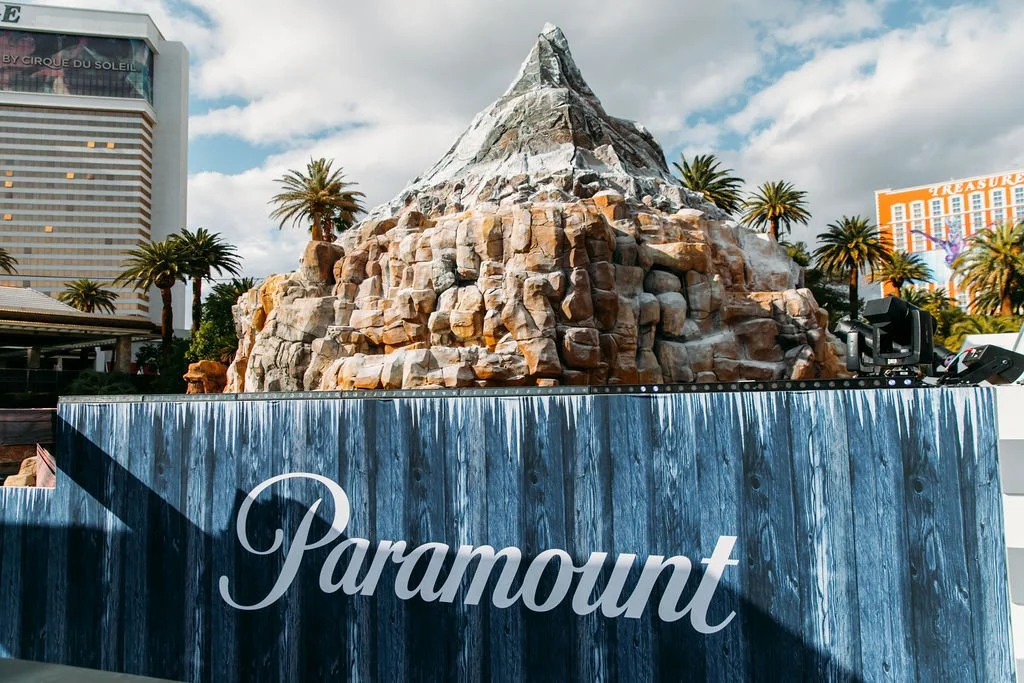
At Super Bowl LVIII in Las Vegas, we built Paramount Peak, a 36,000-square-foot immersive playground under a 75-foot mountain, with 13 IP activations, five 4DX gondolas and more than 2,000 guests a day, plus two VIP events. The campaign started 100 days out on social, digital, TV and out-of-home, so the IRL experience was the payoff of months of build-up rather than a standalone stunt. The project took seven months from start to finish. For a host-city takeover, the timeline starts long before the venue does.
In Miami, we produced FOX’s VIP event for Super Bowl LIV at The Miami Beach EDITION in 2020. Before that, during Super Bowl 50 in Santa Clara, we hosted 10,000 guests. Hospitality during a game week runs on tight windows: guests arrive on a schedule set by the game, and every service decision has to fit around it.
Billboard Latin Music Week in Miami in 2021 ran six days with 25 live panels, streamed globally and held in person. It showed how a multi-day program can serve two audiences at once, the people in the room and a much larger one online.
Across all three, the work that mattered most was early: securing venues before a city fills up, aligning with host committees and local rules, and planning content capture so the experience reaches people who never set foot inside.
Looking ahead
The calendar keeps coming. Super Bowl LXI is at SoFi Stadium on February 14, 2027, and Los Angeles is hosting the World Cup, the Super Bowl and the Olympics in three consecutive years, according to the LA Super Bowl Host Committee. If you are planning around a 2027 or 2028 tentpole, the World Cup’s lessons are a good starting checklist: go where fans gather, build in flexibility, schedule to the calendar and start earlier than feels necessary.