Design for digital: planning a live experience around content capture
Most of the audience for a live experience will never stand in the room. They will see it on a phone, a day or a week later, through photos and video shot by guests, creators, press and the brand’s own team. That is the idea behind #DesignForDigital, a phrase our founder Cara Kleinhaut coined and that BizBash cited when it gave her its Lifetime Achievement Award in December 2025. The physical experience and its digital life are planned together, from the first sketch.
On our home page we put it this way: we plan content capture from the beginning, identifying visual moments, creator opportunities, interview settings, live content and post-event assets, so the experience keeps working across social, digital, PR, OOH and paid media after the doors close. This post explains what that looks like in practice for an experiential marketing agency, and where it changes the plan.
Why content capture belongs in the floor plan
Guests already behave this way. In Event Marketer’s EventTrack 2026 study, 59% of attendees said they capture content at live experiences, and 82% said they tell friends or family about the brand interaction. The same study found content is the top investment area for marketers, with 48% to 65% planning to invest more in content created for live experiences.
Creator events are growing too. In a survey by the Influencer Marketing Factory reported by PPC Land, 41% of U.S. social media users aged 18 to 65 had attended at least one in-person influencer event in the past year.
If people are going to film the experience either way, the only question is whether the space was designed to look good when they do. That decision has to be made before the floor plan is final, because it affects lighting, layout, backgrounds, power and staffing.
1. Design the photo moment first
Every experience should have at least one image that guests want to make their own. It should be easy to read at phone size, recognizably on-brand without a logo in every corner, and placed where people can stop without blocking the flow.
Some examples from our own work:
- InStyle Imagemaker Awards. At the second annual awards, on a rooftop above Los Angeles, the #InStyleElevator photo moment gave guests a branded shot of their own to share. See our InStyle case study.
- Miss Dior Millefiori. At Gansevoort Plaza during New York Fashion Week, a classic car overflowing with florals and an infinity flower field mirror room gave guests two very different shots inside one pop-up.
- Olaplex at The Grove. During Oscars weekend, guests got express hairstyling and then captured red-carpet-ready photos, so the content showed the product result on the guest’s own hair.
The Olaplex example shows a useful rule: the best photo moment often comes after the product does its job. A guest who just had their hair styled wants a photo, and the photo carries the product claim for you.
2. Build objects that create content
A photo wall waits for guests to use it. An interactive object gives them a reason to film. J.Crew is a good example. At its summer clubs in Nantucket and Martha’s Vineyard and its Under the Palms event in Palm Beach, guests met a viral vending machine, a J.Crew Slot Machine, chain-stitch embroidery by APPRVL and, in 2025, the debut of the J.Crew Photobooth. Each one has a moment of surprise built in, which is exactly what people film.
Experiential vending machines also do quiet work in the background. A QR code to start the interaction, a personalized result and a data capture step turn a fun object into a source of first-party information, without asking guests to fill out a form.
3. Treat moving assets as content engines
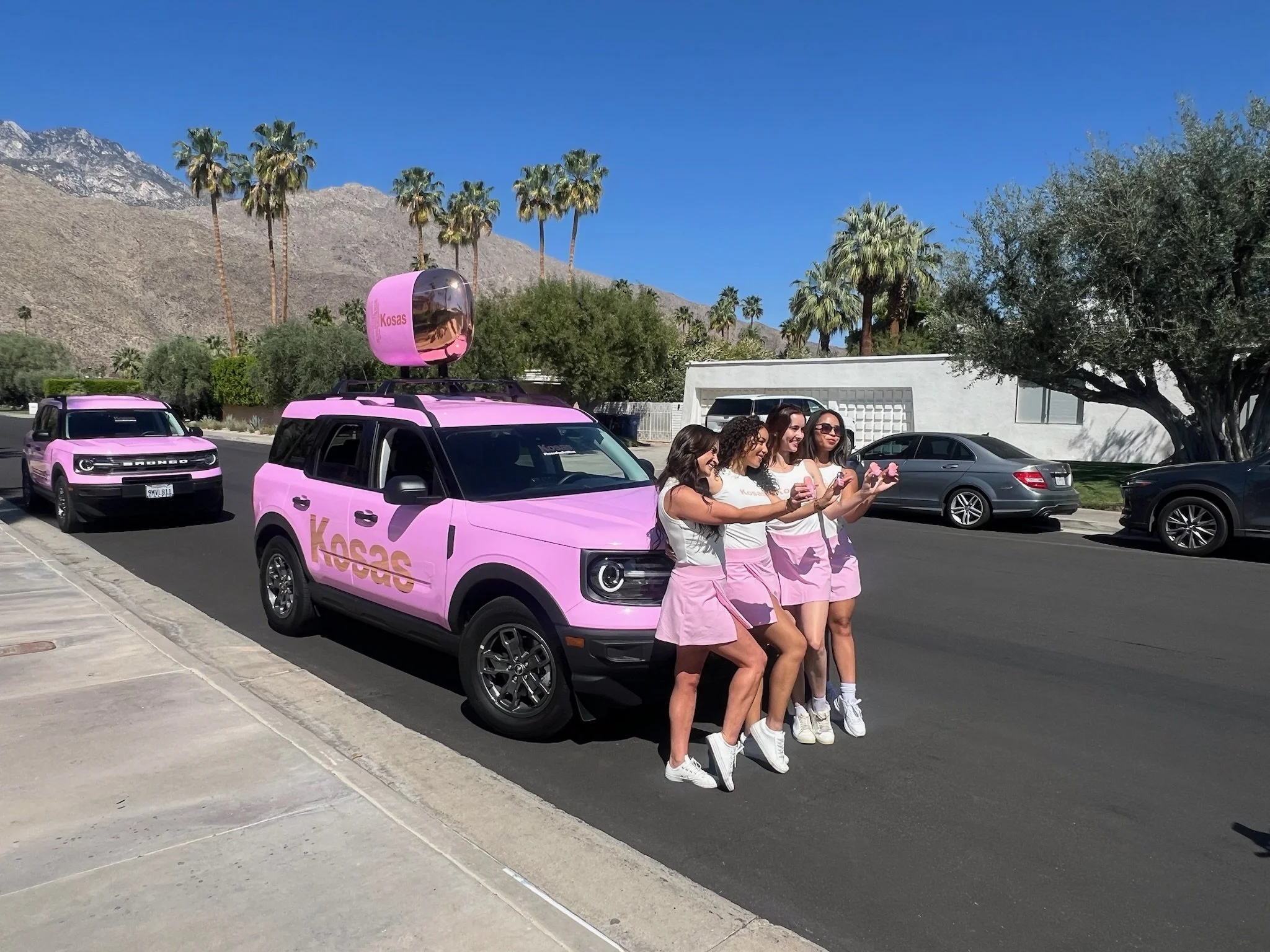
At Coachella 2025, Kosas launched DreamBeam with a fleet of four custom bright pink Broncos topped with oversized DreamBeam products. The cars gave rides and distributed more than 6,000 sunscreen samples over three days, with partners Unwell and Pressed Juicery keeping fans cool. They were also impossible to miss in a crowd, which meant every festival-goer with a phone became part of the distribution. The result was more than $3.5 million in earned media value in Weekend 1 alone, coming in right under rhode for top-performing beauty activations at the festival. The full story is on our Kosas DreamBeam case study.
The lesson is that a vehicle, a cart or a booth that moves is a camera magnet. Design it to be photographed from every side, not just the front.
4. Plan the creator flow
Creators need different things than general guests. They need time, light, space to film, and often a quieter corner to record voiceover or a talking-head clip. When creators are a core audience, we plan their path through the space separately.
The TRESemmé A-List Retreat in Jackson Hole is a clear case. Seventeen top influencers spent the trip moving through personalized styling sessions, a charm bar, an A-List Lounge and an après-ski party, each designed as a setting for content. The goal was organic UGC and real brand affinity, and every touchpoint was built to make that easy. See the TRESemmé case study.
For Aerie, the first-ever West Coast pop-up on Abbot Kinney in Venice was built as a garden of confidence with custom fittings. Its Comfy Club pop-ups for Real Rewards members in Monterey, Los Angeles and Rancho Cucamonga added soft serve, DJs and custom merch. In both cases the guest’s own experience, a fitting or a scoop of soft serve, was the thing worth sharing.
5. Check bandwidth and sightlines on the site visit
Two practical issues decide whether content actually gets made and posted:
- Bandwidth. A room full of people filming and posting at once is a real network load. Ask the venue what its WiFi can actually carry, and plan dedicated connectivity for anything that streams live. Cara’s venue checklist on this journal calls this “a real bandwidth conversation now, not a nice-to-have.”
- Sightlines. Photographers need a clean angle without fighting the crowd. That means planning press positions, keeping photo moments out of the main walkway, and checking how the space reads on camera at the times of day you will be open.
Lighting belongs on the same list. A space that looks great to the eye can look flat or orange on a phone. We test key moments on phones during the build, not after doors open.
6. Decide where the cameras go away
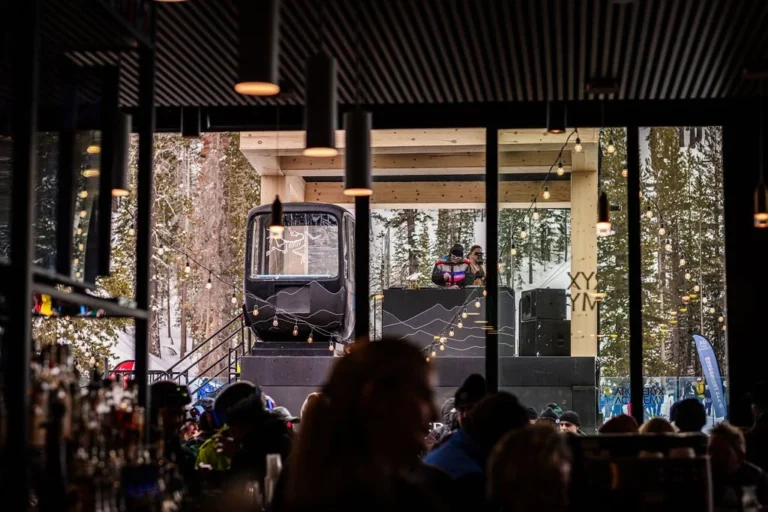
Designing for digital also means deciding where content should not happen. At Coachella 2026, BizBash reported that Pinterest ran the festival’s first phone-free activation. Some guests want a break from filming, and some moments, like a private dinner or a talent conversation, are better off the record. The decision should be made on purpose, with signage and staffing to match.
7. Staff the capture like part of the show
Guest content is only part of the picture. The brand’s own photo and video team needs a call sheet, a shot list and access to every zone, just like the bartenders and the security team. On most of our projects, the photography credit goes to Clark Studio, and the shoot is scheduled inside the run of show, including time before doors open to capture the space empty and time during peak hours to capture it full. If post-event assets are part of the plan, decide who edits them and when they go live before the event, not after.
A planning checklist
- Write the shot list before the floor plan. Know which five or six images the experience needs to produce.
- Place photo moments where guests can pause without stopping the line.
- Design at least one interactive object with a built-in surprise.
- Map a separate path and schedule for creators and press.
- Check venue WiFi capacity and add dedicated connectivity for live streams.
- Test lighting on phones during the build.
- Plan the post-event assets: who shoots, who edits, and when it goes live.
When the physical space is designed this way, the experience keeps working long after strike. If you want to plan your next activation with content in mind from the first sketch, look at our services or get in touch.